
Horseshoe Beach Criminal History Checks
Start by deciding which record answers the question. A deputy's report describes the event and allegations. A jail entry shows intake and custody. The clerk docket shows charges filed in court and their outcome. FDLE's history product gathers reported Florida arrests and dispositions. One source cannot replace all the others.
- Identify whether DCSO, Florida Fish and Wildlife Conservation Commission, or Florida Highway Patrol handled the event.
- Ask that creating agency for its incident or arrest report through its official records channel.
- Search Dixie SmartWEB for recent booking or release data.
- Use the clerk's Court Records Search for filed county or circuit charges.
- Use FDLE Instant Search only when a statewide history is needed.
Match names with dates, case numbers, agency fields, and other public identifiers. A common name is not proof of identity. If one's own Florida history seems wrong or lacks a disposition, FDLE offers a free fingerprint-based Personal Review and challenge process.
Horseshoe Beach Agency Choice
A typical local law-enforcement incident routes to the Dixie County Sheriff's Office. Coastal geography adds a key wrinkle. A boating, wildlife, or conservation event may have been handled by FWC, while a state-road event may belong to FHP. The creator controls the incident report, even if the person later enters the same county jail and court systems.
Ask which officer and agency created the case before sending a broad request. A DCSO search will not necessarily produce an FWC report. The reverse is also true. This creator-first rule is the fastest way to avoid a false “no records” result in Horseshoe Beach.
Records at the Horseshoe Beach Police Department
No official Horseshoe Beach municipal police department, police records unit, app, request form, arrest log, or police portal was verified. That absence should guide the search rather than be filled with a guessed city office. DCSO is the sound first contact for a typical city incident, subject to the coastal and state-road agency distinction.
A request should identify the event date, approximate time, Horseshoe Beach location, case or incident number if known, and the exact report or media sought. State the desired date range, delivery format, and whether inspection or copies are requested. Confirm the custodian's current email, mail, telephone, or counter channel before transmitting a request.
Horseshoe Beach Coastal Reports
Consider the setting of the event. A vessel stop, wildlife enforcement action, or conservation investigation can create an FWC record. A collision or enforcement event on a state road may create an FHP record. A call handled by a Dixie deputy ordinarily creates a DCSO file. The arresting-agency field in the county booking entry can help confirm which route applied.
| Event setting | Likely first custodian | Next record stop |
|---|---|---|
| Typical city incident | Dixie County Sheriff's Office | SmartWEB, then Dixie Clerk if filed |
| Boating or wildlife matter | Florida Fish and Wildlife Conservation Commission | County custody and court if applicable |
| State-road event | Florida Highway Patrol | County custody and clerk if applicable |
This routing is a starting point, not a statement that one agency handled every event of that type. Confirm the report number and creator.
Booking and Arrest Records in Horseshoe Beach
Horseshoe Beach has no verified city jail or separate arrest roster. A custodial arrest routes into Dixie County Jail. SmartWEB is the official public booking view, with name fields, booking and release date ranges, sorting controls, and a “Booked Last 24 Hours” option. It is useful when a very recent event has not yet become a clerk case.
The public entry can include booking and release data, arresting agency, initial charge, bond, and custody status. It describes jail intake, not guilt. The prosecutor may later file a different count, amend a charge, or decline prosecution. Read the clerk disposition before drawing a conclusion about the outcome.
County-wide instructions for the jail feed and its limits appear in the Dixie County arrest search. The report narrative still must come from DCSO, FWC, FHP, or the actual creator.
Trace Horseshoe Beach Custody
Use a date range when spelling is uncertain or when the event date is the strongest fact. Search booking and release dates separately. Then inspect the arresting-agency field. It can point back to the correct report custodian and help distinguish a Horseshoe Beach event from another county intake.
“Booked Last 24 Hours” measures jail intake. It is not a city crime count, a conviction list, or a complete police blotter. A person can be booked for an event elsewhere, and a local report may never lead to booking. The tool should answer a custody question only.
The Horseshoe Beach Municipal Court File
No verified Horseshoe Beach municipal court or city case-search portal was found. Filed misdemeanor and criminal traffic matters go through Dixie County Court, while felony cases proceed in Circuit Court of the Third Judicial Circuit. The Dixie County Clerk maintains both. Confirm ordinance or citation routing with the city and clerk rather than assuming a separate city docket exists.
| Court Name | Dixie County Court and Circuit Court of the Third Judicial Circuit |
|---|---|
| Case Types Heard | Filed misdemeanor, criminal traffic, felony, and related county matters |
| Case Lookup Channel | Dixie Clerk Court Records Search, clerk counter, telephone, or mail request |
| What the Docket Shows | Case number, filed counts, docket events, hearings, judgment, sentence, and financial entries when public |
| Copies & Fees | Confirm current inspection, copy, certification, and service costs with the clerk |
Use Court Records Search, not the “Official Records” land and instrument index. When an online image is unavailable, ask the clerk for inspection or a plain or certified copy.
Horseshoe Beach Storm Access
Horseshoe Beach's coastal location makes remote channels more than a convenience. Storm closures, evacuation orders, and road conditions can interrupt travel to Cross City or access to a local office. Check operating status first. Use online searches for booking and docket data, telephone to confirm the custodian, and mail when a signed or certified request must move without a visit.
The Florida Department of Health's Dixie community planning material supplies official local context for the county's two municipalities.
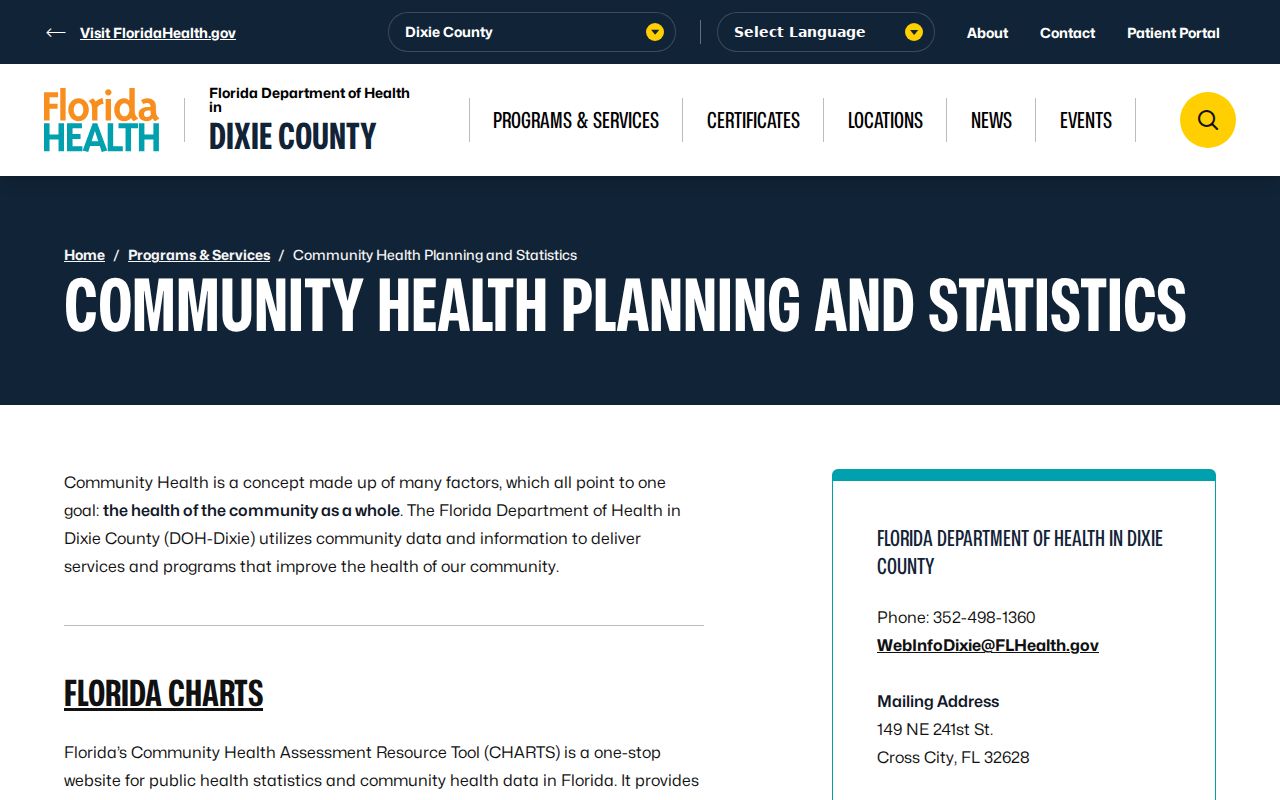
The local context supports a record plan that keeps online, phone, and mail routes available.
How Horseshoe Beach Records Reach the County
Horseshoe Beach does not need a city jail or city court portal for an event to create an official trail. The reporting agency retains its report. Dixie County Jail creates custody data. The State Attorney decides what to file, and the clerk maintains the court case. FDLE can later attach fingerprint-supported arrest and disposition submissions to a state history.
Record flow: DCSO, FWC, or FHP › Dixie County Jail › Dixie County Courts › Florida Department of Law Enforcement
Recent activity may appear in SmartWEB before a court case exists. The clerk file is the better source for prosecution and outcome. FDLE can add reported Florida events outside Dixie, but its public Instant Search is name based and is not certified.
Horseshoe Beach Crime Context
Official planning material places only a small share of Dixie County residents in Horseshoe Beach. A small change in incident count can cause a large swing in a rate. Sound city reporting therefore states the year, raw count, population base, offense definition, and agency coverage.
The official Dixie County Census QuickFacts page provides county context without pretending county totals belong to the city.
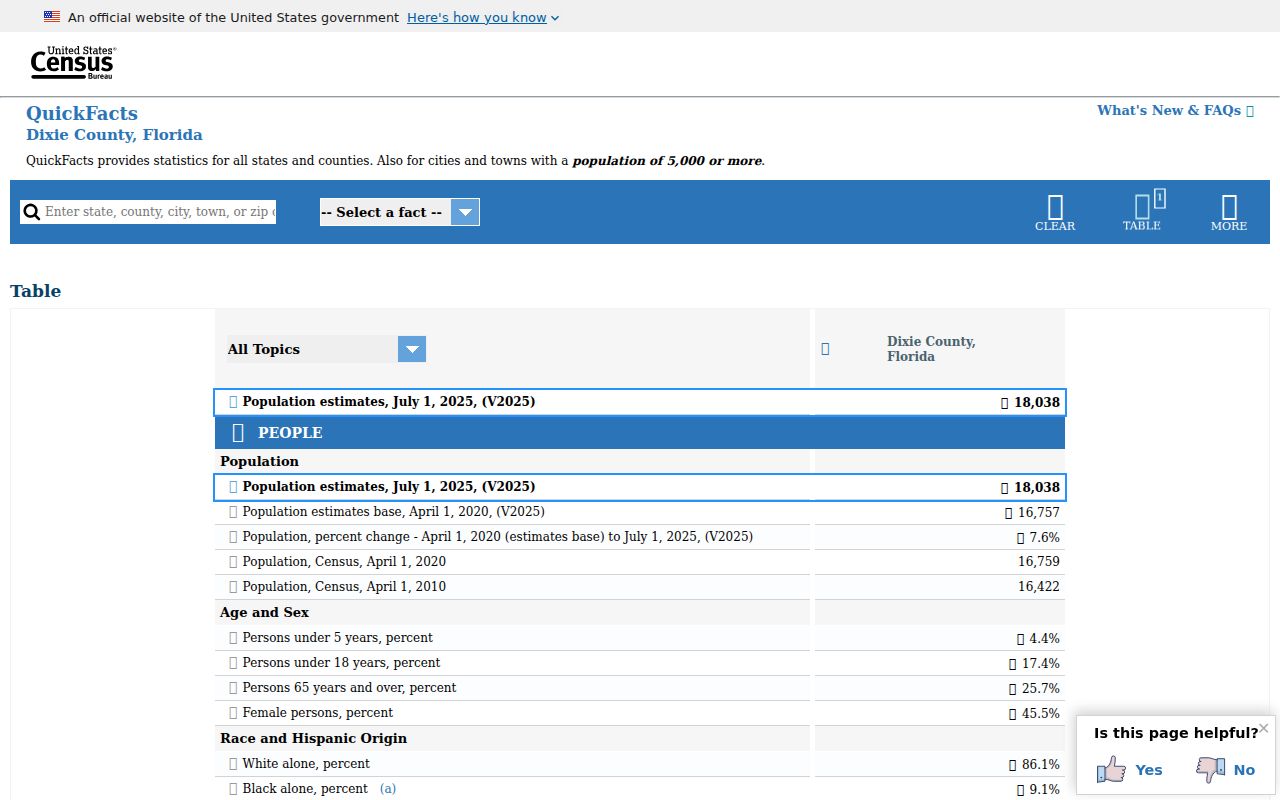
The image reinforces why a countywide DCSO total should never be relabeled as Horseshoe Beach crime.
Horseshoe Beach Record Relief
Florida sealing and expunction are different remedies. Sealing makes an eligible record confidential from ordinary public access while authorized agencies retain it. Expunction generally directs covered records to be destroyed or removed as the statute provides, while FDLE keeps a confidential notation and limited statutory access remains. Neither occurs just because a public search is blank.
The applicant first seeks an FDLE Certificate of Eligibility, then petitions the court where the case arose. The official court-ordered expunction statute sets the expunction framework.
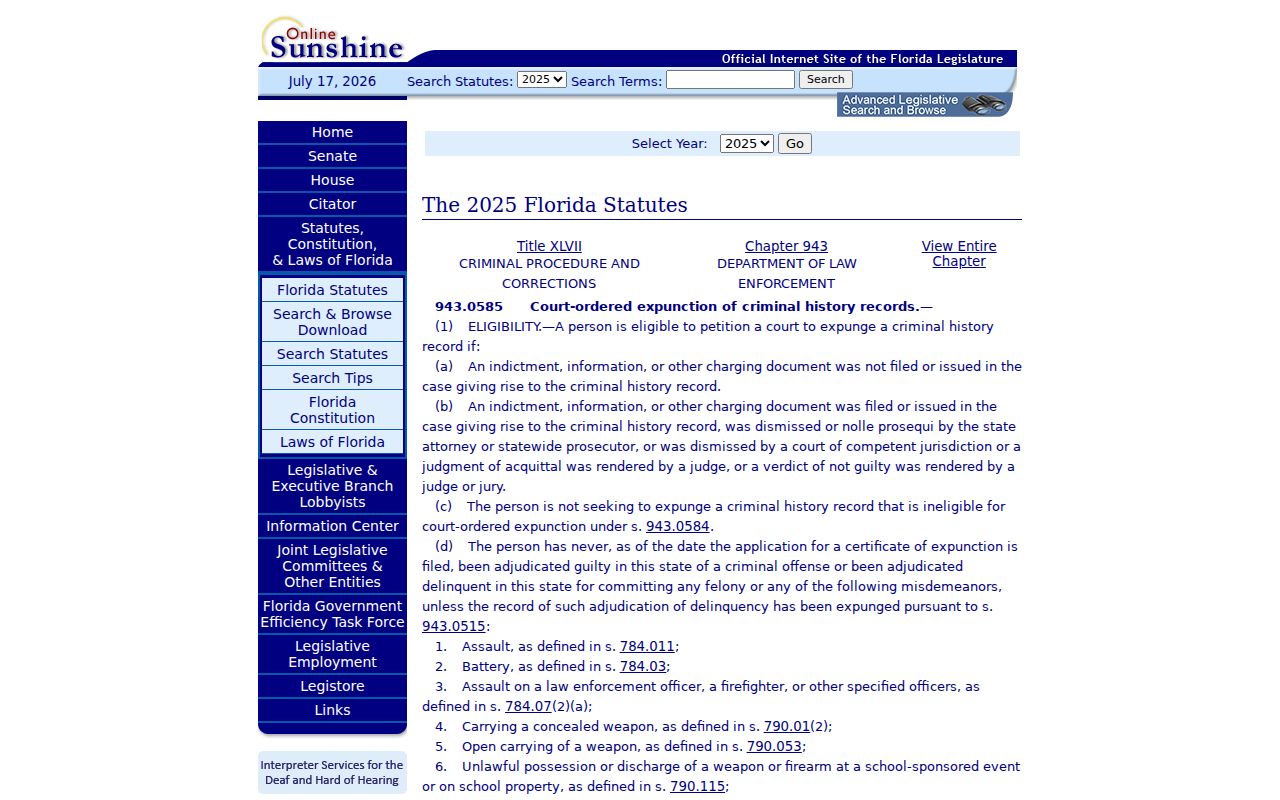
A certificate allows a court filing; it does not guarantee that a judge will grant relief.
Horseshoe Beach Record Access Rules
Florida Constitution article I, section 24 and chapter 119 govern access to nonexempt agency records. Court records also follow Florida Rule of General Practice and Judicial Administration 2.420. Protected victim data, juvenile material, active investigative information, personal identifiers, sealed cases, and expunged records can be withheld or redacted under applicable law.
Florida's court-ordered sealing statute explains one important limit on ordinary public access.
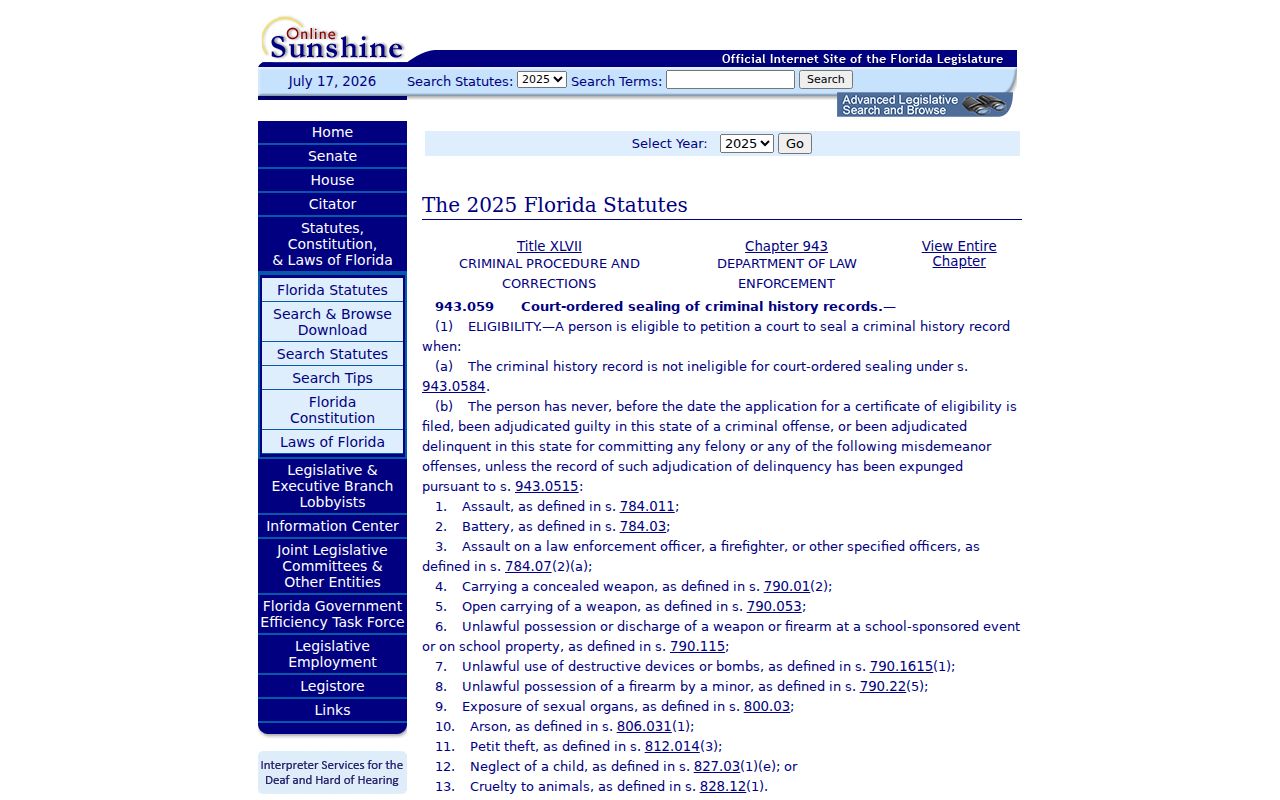
The statute shows why an absent public result cannot by itself prove that no record ever existed.
Key Statutes:
Florida Constitution article I, section 24 and chapter 119 establish access to nonexempt agency records.
Florida Statutes section 943.053 authorizes FDLE criminal-history dissemination.
Florida Statutes section 943.0585 governs court-ordered expunction.
Florida Statutes section 943.059 governs court-ordered sealing.
Horseshoe Beach Remote Case Copies
The Dixie Clerk counter at 214 NE Highway 351 in Cross City opens Monday through Friday from 8:30 a.m. to 5:00 p.m. U.S. mail goes to P.O. Box 1206, Cross City, FL 32628, and the main number is (352) 498-1200. Call first during a storm or closure. Confirm current copy costs, accepted payment, and delivery options before ordering.
Name the filed information, docket, judgment, or sentence needed. An online docket without a document image can still identify a public filing that clerk staff may inspect or copy. Older material can require retrieval. Remote court channels preserve access for Horseshoe Beach residents when coastal travel is difficult.